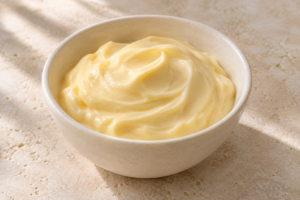
Make a quick food-processor mayonnaise and explore seven flavoured mayonnaise variations. Learn the principles of a stable cold emulsion and how to adjust seasoning.
Mayonnaise is a cold emulsifying sauce. First invented in 1756, this recipe is adapted to the 21st century. With this recipe you will never fail a mayonnaise again; this mayonnaise is made in 3 minutes in a food processor. A list of 7 aromatized mayonnaises is also included.
This recipe connects to Sauce Making Fundamentals — learn the technique step by step in the video lessons.
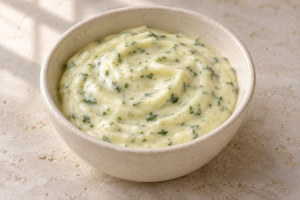
Hints and tips: The following is a list of different aromatized mayonnaises to make crazy and delicious mayos! Chili Mayonnaise: Delicious with all barbecued foods! Add 2 teaspoons of chili paste to 1 recipe portion of traditional mayonnaise. For a milder flavor, add only 1 teaspoon. Sundried Tomato Mayonnaise: Sundried tomatoes are the perfect compliment for goat cheese, mushrooms or your favorite pasta dish. Mix 1 tablespoon of sundried tomato paste with 1 recipe portion of mayonnaise. Basil Mayonnaise: Delicious with all your summer dishes! Combine 1 tablespoon of basil puree, and 4 chopped basil leaves with 1 recipe portion of mayonnaise. Add salt & pepper to taste. Horseradish Mayonnaise: Great with leftover roast beef! Combine 2 tablespoons of horseradish with 1 recipe portion of traditional mayonnaise. For a milder flavor, add only 1 tablespoon. Beet Mayonnaise: Rich in color, this mayonnaise provides the perfect contrast for white meats or fish. Process 1 small beet in a juicer (very small, only 50 grams!) and add the juice to a thick mayonnaise. Season with salt and pepper to taste. Asparagus Mayonnaise: Very delicate flavor, ideal with smoked salmon or other fish. Combine 3 ounces of cooked and finely chopped asparagus tips. I do not like to use the stems for this recipe, because of the fibers. Indian Mayonnaise: Good with almost anything! Potatoes, meat, fish, dips, etc. To 1 mayonnaise recipe, add 2 teaspoons of curry powder, a pinch of cumin, and a pinch of fennel powder. If you'd like to go deeper, Sauce Making Fundamentals covers this in full.
If you'd ever like hands-on guidance for your own kitchen or restaurant, I also offer 1-on-1 coaching through OCS, or you can reach me directly for consulting at 911ChefEric.com.
Recipes come out right when you understand the method. Chef Eric’s courses teach the foundations step by step — knife skills, stocks, soups and classic French technique — with video lessons and short quizzes. Not sure where to start? OCRS™ will build your roadmap in five questions.