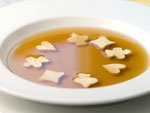
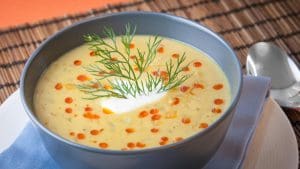
Make Japanese clam miso soup with dashi, fresh clams, tofu, seaweed and ginger. Learn how to handle the clams and preserve the miso’s flavor.
Combine Dashi and water in a large pot over medium-high heat and bring to boil for five minutes. Add the clams, cover; until clams open, about three minutes (discard clams that do not open). Remove from heat. Transfer clams to a bowl. Remove meat from shells; reserve meat and shells separately. Strain broth through a fine strainer and return the broth to the rinsed pot.
In a bowl, mix the sweet white miso (shiro-miso), the red miso (aka-miso), and the Soya sauce together. Bring the broth to a simmer. Add 1/4 cup broth to miso; stir until miso dissolves. miso into the broth in a pot. Add grated ginger juice and keep warm over medium-low heat (do not boil).
Place a clam shell in each bowl. Place 3 pieces of clam meat in each shell. Sprinkle around the wakame seaweed and tofu, ladle the broth over and the top with the green onion. Serve immediately.
Clam miso soup is a Japanese seafood soup that combines the savoury depth of dashi with the umami of miso and the natural brininess of fresh clams. This version uses both white and red miso, tofu, seaweed and ginger for a balanced broth with a delicate seafood flavour. The clams add depth as they cook and release their juices into the soup.
Prepare the dashi according to the recipe, then add the clams and cook until they open and are cooked through. Add tofu and seaweed as directed. Dissolve the miso separately in a little hot broth before returning it to the pot; this helps prevent lumps and distributes the seasoning evenly. Avoid boiling the soup vigorously after the miso is added, as high heat can dull its aroma.
White miso is generally milder and sweeter, while red miso is typically more robust and savoury. Combining them creates a more layered flavour, but the balance depends on the brands and the recipe. Taste before adding extra salt because miso is already salty.
Purchase clams from an approved supplier and keep them refrigerated until preparation. Discard cracked or damaged shells and follow supplier guidance for cleaning and purging grit. Cook the clams thoroughly; discard any that do not open during cooking. Prevent cross-contamination between raw shellfish and ready-to-eat ingredients.
Chef's tip: Add the miso near the end and keep the broth below a vigorous boil. This preserves its aroma and produces a clean, balanced soup.
This recipe connects to Soups Making 101 — learn the technique step by step in the video lessons.
Used extensively in Japanese cooking, dashi is a soup stock made with dried bonito tuna flakes and water. Dashi-no-moto is this stock in instant form; it comes granulated, powdered, and in concentrate. It should be available at your local Japanese food store. If you'd like to go deeper, Soups Making 101 covers this in full.
If you'd ever like hands-on guidance for your own kitchen or restaurant, I also offer 1-on-1 coaching through OCS, or you can reach me directly for consulting at 911ChefEric.com.
Recipes come out right when you understand the method. Chef Eric’s courses teach the foundations step by step — knife skills, stocks, soups and classic French technique — with video lessons and short quizzes. Not sure where to start? OCRS™ will build your roadmap in five questions.