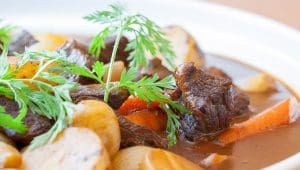
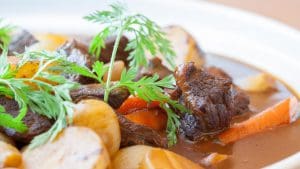
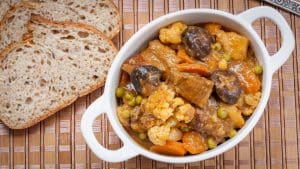
Learn how to braise beef cheeks until fork-tender, then finish them with a golden crust. Explore trimming, searing, slow cooking, collagen conversion and professional sauce finishing.
Preheat oven to 325°F / 165°C
Heat vegetable oil in an ovenproof large enamelled cast iron casserole over moderately high heat until hot but not smoking.
While oil is heating, pat beef cheeks dry and with salt and pepper, and dredges them in flour. Brown beef, without crowding, on all sides, about 20 minutes total, and transfer with tongs to a bowl.
Pour off fat from the pot, then add a tablespoon butter and cook onion, garlic, and carrots over moderately low heat, stirring occasionally, until softened, about 5 minutes. Add the wine, cloves, orange zest, , salt, and pepper.
Return the cheeks (with any juices) to the pot and bring to a , then braise, covered, in the middle of the oven until very tender, about 3 hours.
the potatoes and place them in a pot covered with cold water by an inch. season with a teaspoon of rock salt, and simmer for 20 minutes. Let the potatoes cool and peel them. cut the tomatoes into 1/4 inches (0.6 cm).
Raise oven to 425°F / 220°C.
When the cheeks are tender transfer them with the sauce into a round dish. Cover the top with the sliced potatoes making sure to overlap them.
Melt the remaining butter and brush over the potatoes.
Place the gratin dish in the oven, uncovered, and cook for about 20 minutes or until the potatoes are golden brown.
Serve hot, with a nice Côtes du Rhône.
Braised beef cheeks are a slow-cooked preparation that transforms a hardworking, collagen-rich muscle into tender, flavourful meat. The cheeks are seared to develop colour, then cooked in a covered pot with liquid until the connective tissue softens. A final high-heat finish can create a golden crust while preserving the moist interior.
Trim away tough surface membranes and excessive sinew while retaining the meat's natural shape. Portion evenly so the cheeks cook at a similar rate. Pat the surface dry and season according to the recipe; dry meat browns more effectively than wet meat.
Sear the cheeks in a hot pan to develop a deep brown surface, working in batches to avoid overcrowding. Remove the meat and build the braising base with the aromatics and liquid specified in the recipe. Return the cheeks to the pot, cover and cook gently until tender. Avoid a hard boil, which can make the meat contract and disturb the sauce.
Once tender, remove the cheeks carefully and reduce or strain the braising liquid as required. Apply the recipe's finishing treatment and use a hot oven or pan to create a golden exterior without drying the meat. The centre should remain moist and tender.
Key point: The long, moist cooking period is what softens the collagen-rich beef cheek; searing develops flavour but does not replace the braising step.
This recipe connects to Meat & Poultry — learn the technique step by step in the video lessons.
Funnily enough, the name 'beef cheek' refers to the facial cheek muscle of a cow. It's a very tough and lean cut of meat and is most often used for braising or slow cooking to produce a tender result. You may need to order them ahead from your butcher. If beef cheeks aren't available, beef brisket cut into pieces of the same weight make a good substitute. If you'd like to go deeper, Meat & Poultry covers this in full.
If you'd ever like hands-on guidance for your own kitchen or restaurant, I also offer 1-on-1 coaching through OCS, or you can reach me directly for consulting at 911ChefEric.com.
Recipes come out right when you understand the method. Chef Eric’s courses teach the foundations step by step — knife skills, stocks, soups and classic French technique — with video lessons and short quizzes. Not sure where to start? OCRS™ will build your roadmap in five questions.